Kyle Elite Concrete works as a concrete contractor in Seguin, TX on driveways, aprons, slabs, patios, sidewalks and tear-out work, and there are two things about this city that shape a proposal more than the concrete specification does. One is under the ground and one is in the waste ordinance.
The first is that two of the largest soils in the city look similar and behave very differently, with movement potential that differs by nearly a factor of two. A claim about how much slabs move in Seguin is simply wrong at the scale of an individual lot.
The second is that when we break out your old concrete, it cannot go where demolition waste normally goes in this city. That is a disposal cost and a logistics decision rather than an afterthought to be sorted on the day, and a bid that has not accounted for it is a bid that will grow once the breaker starts and somebody has to find a home for the rubble.
Two Big Soils, Nearly Double the Movement
Branyon Clay Across More Than a Quarter of the City
Branyon clay on 0 to 1 percent slopes covers 28.69 percent of the city, with a further 4.80 percent of Branyon on 1 to 3 percent slopes, making it comfortably the most extensive soil here. Forty-five map units intersect the city in all.
The Branyon component is a Vertisol carrying a representative clay content of 53 percent, a plasticity index of 43 and a liquid limit of 69. Those are demanding figures by any measure, and they describe genuinely difficult ground rather than a regional generalization applied loosely across a whole county. Where your lot carries Branyon, the slab needs to be built for it.
Thirteen Percent Linear Extensibility
Branyon’s linear extensibility is 13 percent, which sits at the high end of the range the soil survey reports for any soil. In practical terms it means a soil column that measurably changes length between a wet spring and a dry August, and does so every year.
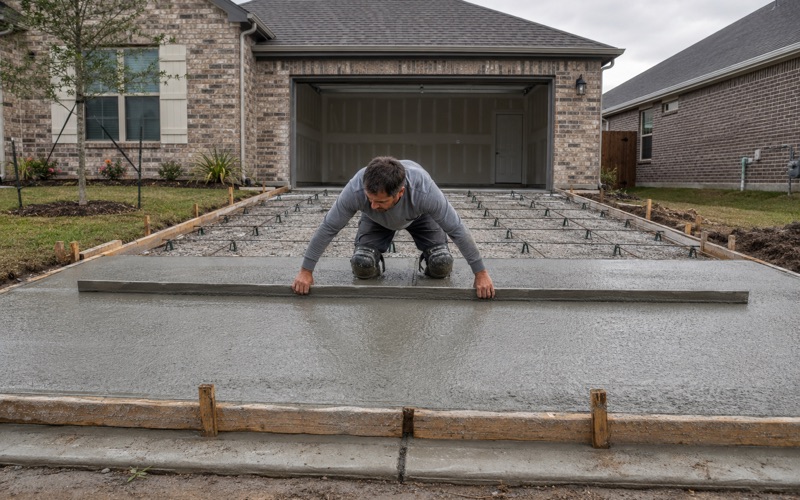
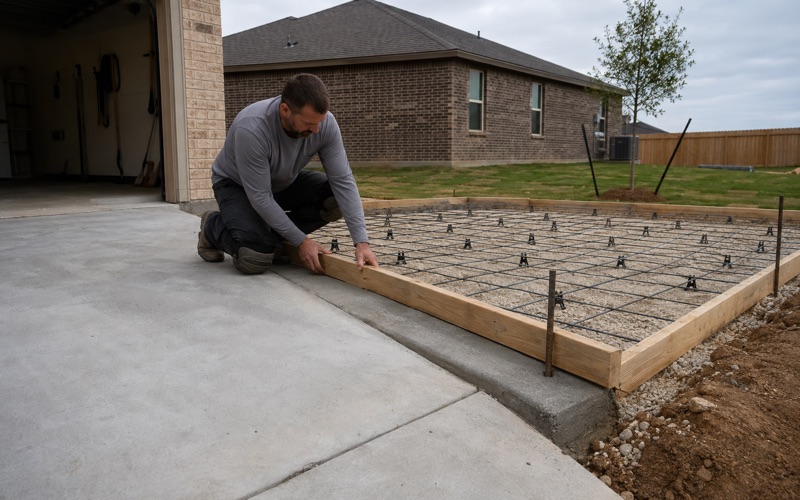
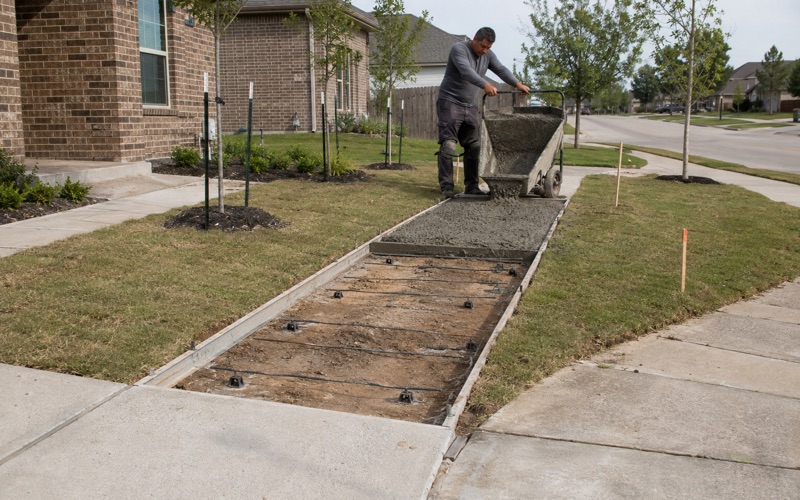
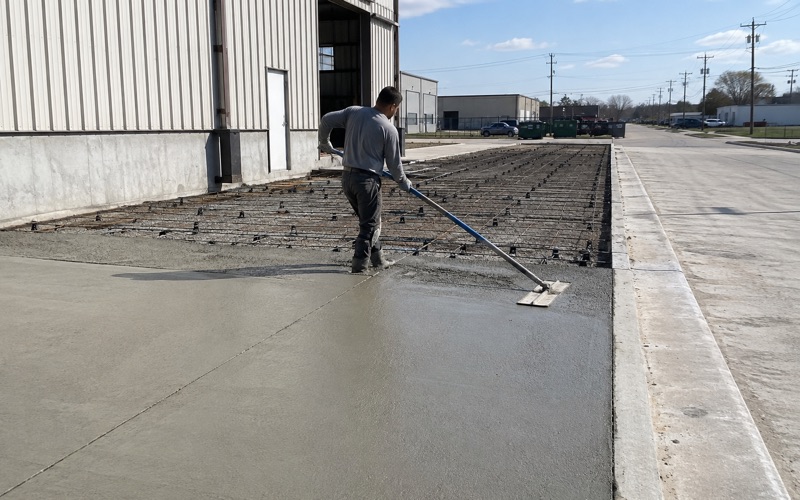
Reinforcement on that ground is doing genuine structural work rather than satisfying a line on a drawing. Nothing poured on the surface stops the ground beneath it from moving, so what the steel actually decides is whether a slab arrives at the far side of a dry summer as one piece or as several. That is worth paying for, and it is worth placing correctly on chairs.
Barbarosa, Which Looks Similar and Is Not
Barbarosa silty clay on 0 to 1 percent slopes is the second largest unit at 19.90 percent of the city, and it is a Mollisol carrying 50 percent clay with a plasticity index of 35 and a liquid limit of 62.5. On those three numbers it reads much like Branyon.
Its linear extensibility, however, is 7.5 percent, which is materially lower than Branyon’s. Two of the largest units in the city therefore differ by nearly a factor of two in movement potential while presenting almost identically to anyone looking into a trench. That is the single most useful thing a homeowner here can know about their own ground before buying a slab.
Looking for concrete-contractor closer to McQueeney? See McQueeney Concrete-Contractor.
What That Means at the Scale of Your Lot
A Claim About the City Is Wrong on a Parcel
Weighting each map unit’s share by its major component percentages across the units whose properties were pulled, together three quarters of the city, 28.5 percent of the city sits on Vertisol-order soil and 37.1 percent on soil whose representative linear extensibility is 9 percent or greater.
Those are useful planning figures and fairly useless design figures. What governs your slab is which map unit your particular address sits on, not what fraction of the city as a whole carries heavy clay. The difference between the two answers is a meaningful amount of reinforcement in one direction or the other, and it is settled by looking rather than by averaging.
Sunev on the River Terrace Edge
Sunev loam on 0 to 1 percent slopes covers 3.23 percent of the city and sits at the far end of the range, carrying a linear extensibility of only 1.5 percent with a plasticity index of 15. These are the river terrace soils along the southern edge of the city.
On Sunev the movement question effectively disappears and the design attention moves to bearing and drainage instead, which are much easier problems to solve. A full Branyon detail applied to a Sunev lot would be a considerable quantity of steel bought to resist something that is simply not going to happen, and you would be paying for all of it.
Almost No Shallow Refusal Anywhere
Only 4.3 percent of the evaluated area carries a root-restricting layer within 50 centimeters, and that is a petrocalcic horizon at 23 centimeters in one gravelly unit. No map unit in the city carries bare stone as a named component at all.
So excavation here is a clay problem rather than a hard-digging problem, which is very nearly the reverse of conditions a short drive west. A machine will keep digging to whatever depth the job requires without meeting resistance. What changes between one lot and the next is what it is digging in, and how that material will behave for decades once concrete is sitting on it.
Working in the Seguin Right of Way
A Two-Year Warranty on the Work
Right-of-way work here carries an obligation most jurisdictions do not impose. The city code requires each right-of-way work permit applicant to execute a work warranty undertaking to warrant the work following its completion for two years.
That is a real commitment rather than a formality, and it is worth asking any contractor bidding your job whether they have actually priced for it. A two-year warranty on work in the public way changes how carefully the subgrade preparation and the compaction under an apron ought to be done, because the cost of doing it poorly returns to the contractor rather than disappearing.
The Five-Year Pavement Rule
No right-of-way excavation permit will be issued in a public way that has been constructed, reconstructed, repaved or resurfaced in the preceding five years, or that has a pavement condition index of 85 or greater. The city engineer may allow an exception for good cause.
That rule can stop a job before it starts, and it depends on the street rather than on the property. Where an exception is sought, the engineer may require additional soil compaction test reports and special paving as a condition, so it is worth establishing the street’s status early.
Insurance and the Homestead Exemption
Right-of-way work permits require a million dollars of comprehensive general liability for property damage per occurrence, the same per person and per occurrence for bodily injury or death, and workers compensation with employer’s liability of at least a million per occurrence.
A homeowner working on their own owner-occupied homestead is exempt from those insurance requirements, but must name the city as an additional insured with waiver of subrogation under their own homeowners or umbrella policy. Right-of-way and building permits may be submitted and reviewed at the same time, each referencing the other.
Tear-Out, Disposal and Who Maintains What
Concrete Is on the Unacceptable-Waste List
This is the detail that catches contractors from out of town. Section 86-112 defines unacceptable waste to include, at subsection (d), tires, concrete, and bulk petroleum or chemical products or by-products, which means demolition concrete cannot go into a franchised commercial dumpster in this city.
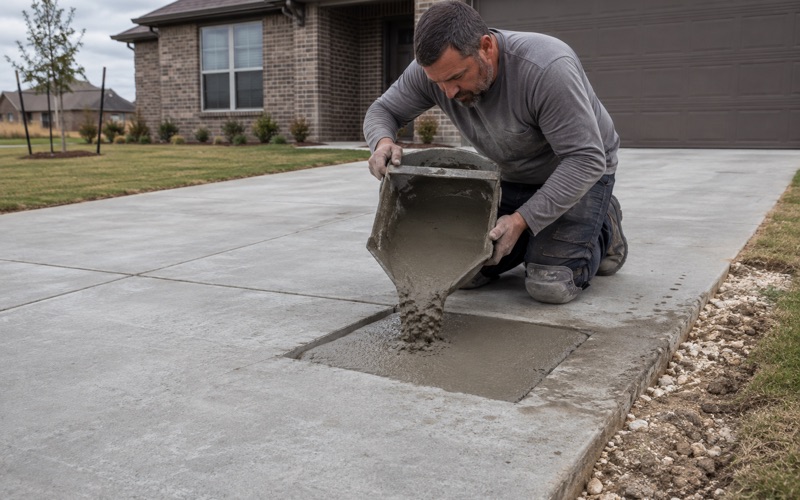
Any replacement job here therefore needs a disposal route planned before the breaker starts rather than after the rubble exists. We price the haul as its own visible line rather than folding it invisibly into a square-foot rate, so you can see what removing the old slab actually costs alongside what pouring the new one costs. Those are two different jobs and they deserve two numbers.
The Apron Is Yours to Maintain
The code treats the driveway apron as the property owner’s responsibility and as continuous with the sidewalk, stating that property owners shall be responsible for maintaining their driveway aprons, including the portion of the apron that is integrated with the sidewalk.
That is worth knowing before a dispute rather than during one. It means the piece of concrete between your property line and the street is yours to keep in order, and the same applies to the parkway strip between the property line and the curb line, including where no curb exists.
Sidewalks and Restoration
Public sidewalks may not be removed or damaged, and an owner, tenant or lessee is responsible for damage caused by anyone working on their behalf. Failing to restore streets and sidewalks damaged by construction within a reasonable time after the other work is complete is unlawful.
We build restoration into the sequence rather than leaving it as a final item that competes with the next job for attention. Utility lines placed within or under a city right-of-way must also sit with their uppermost surface at least 24 inches below the existing surface, which matters whenever a job involves a service run.
- 20+ Years in Hays County
- Insured & Permitted
- Free Estimates