Kyle Elite Concrete handles concrete resurfacing in Kyle, TX, and after more than 20 years here we have learned to lead with the disqualifying question rather than the sales pitch, serving surrounding cities including Buda, San Marcos, Manchaca, Shady Hollow, Redwood. Resurfacing is excellent work when a slab qualifies and a waste of money when it does not.
The premise is simple. A structurally sound slab with a worn, stained, crazed or dated surface can be given a new wearing surface bonded on top, at a fraction of the cost and disruption of removal and replacement. The new surface can be plain, textured, patterned or colored.
The catch is equally simple. An overlay is only as stable as the concrete it is bonded to, so a slab that is still moving, delaminating or holding moisture will telegraph its problems through the new surface, usually within the first year. Establishing which situation you are in is the first thing we do.
Deciding Whether a Slab Can Be Resurfaced
Testing the Bond and Sounding the Surface
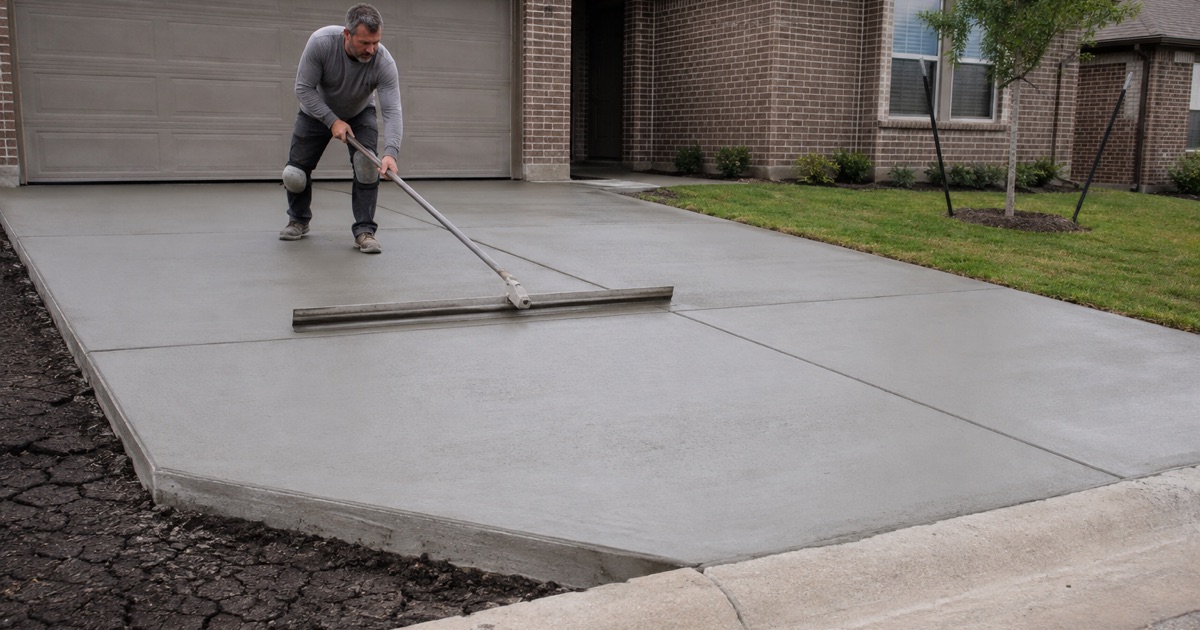
We sound the slab to find hollow, delaminated areas and check that the existing surface is sound enough to bond to, because an overlay laid over a loose top layer takes that layer with it when it fails. Contamination matters too, since old sealers, curing compounds, oil and coatings all interfere with adhesion. Where the surface has been sealed, it has to be mechanically profiled first rather than simply cleaned.
Movement, Cracks and What Telegraphs Through
A crack that is still working will reappear in the overlay above it, and no product on the market prevents that reliably. Static, stable cracks can be treated and bridged with a much better chance of staying invisible. We look at crack width, whether the two sides are level, and what the ground under the slab is doing before making any promise about appearance.
Moisture, Vapor and Slabs Poured Without a Barrier
An older interior slab poured with no vapor retarder underneath will move ground moisture up through the concrete continuously, and that vapor drive is enough to lift many overlay and coating systems off the surface. Testing for it is quick and it changes the recommendation entirely. Where moisture is present, the answer is a system designed to tolerate it rather than the standard one.
Resurfacing Systems We Use
Microtopping and Thin Overlays
A microtopping is a very thin polymer modified cementitious layer that renews a surface and takes color well, without changing elevations enough to matter at a door threshold or a step. It is the lightest-touch option available. Because it is thin, it demands the most from the substrate underneath, so it is also the one with the strictest qualifying conditions.
Stampable and Textured Overlays
A thicker overlay can be textured, stamped or given a broom or knockdown finish, which is how a plain worn patio or pool deck gets the appearance of a new decorative pour without removal. Elevation change is greater, so thresholds, steps and drain heights all have to be checked first. Done well the result is difficult to distinguish from a new decorative slab.
Color and Finish on a New Overlay
An overlay takes color the same ways a fresh slab does, through integral pigment in the mix, a broadcast hardener, or a stain applied once it has cured, and it can be left plain, broomed, knocked down or stamped. Because the layer is thin, color sits closer to the surface than it does in a full depth pour, which makes the sealer more important to its longevity. We agree the finish on a sample panel before committing the whole area.
Self Leveling Underlayment for Interior Floors
Where an interior slab is out of flat rather than worn out, a self leveling underlayment restores a true plane ready for flooring or a coating. It fills low spots and corrects the ripples that a hand finished floor can leave. It is a preparation product rather than a wearing surface in most cases, and we specify it as part of a floor build-up rather than on its own.
Cost, Life and the Honest Alternative
What Resurfacing Costs Against Replacement
Resurfacing costs substantially less than tear out and replacement and puts the surface back into use much sooner, with no demolition, haul-off or base rebuild. Where a slab qualifies, it is usually the clear winner on both counts. Where it only just qualifies, the gap narrows enough that replacement can be the better long-term purchase, and we will show you both numbers rather than one.
How Long a Resurfaced Slab Lasts
A well bonded overlay on a sound, dry, stable slab performs like the concrete beneath it and is maintained the same way, with resealing on a cycle where the finish is decorative. What shortens that life is nearly always something that was true before the overlay went down. This is why the qualifying stage gets more attention from us than the product selection does.
When We Tell You Not to Resurface
If the slab is cracked through and moving, delaminating over a wide area, too thin for its load or driving moisture up through itself, we will say so and recommend replacement instead. Taking that work and letting it fail costs you twice and costs us a reputation. The disqualifying answer is part of the service rather than a lost sale.
- 20+ Years in Hays County
- Insured & Permitted
- Free Estimates